A calm place to learn

Meet jumping spiders at your own pace.

Begin with a gentle introduction, move into practical care, or go deeper into the science. You choose how much detail to open.

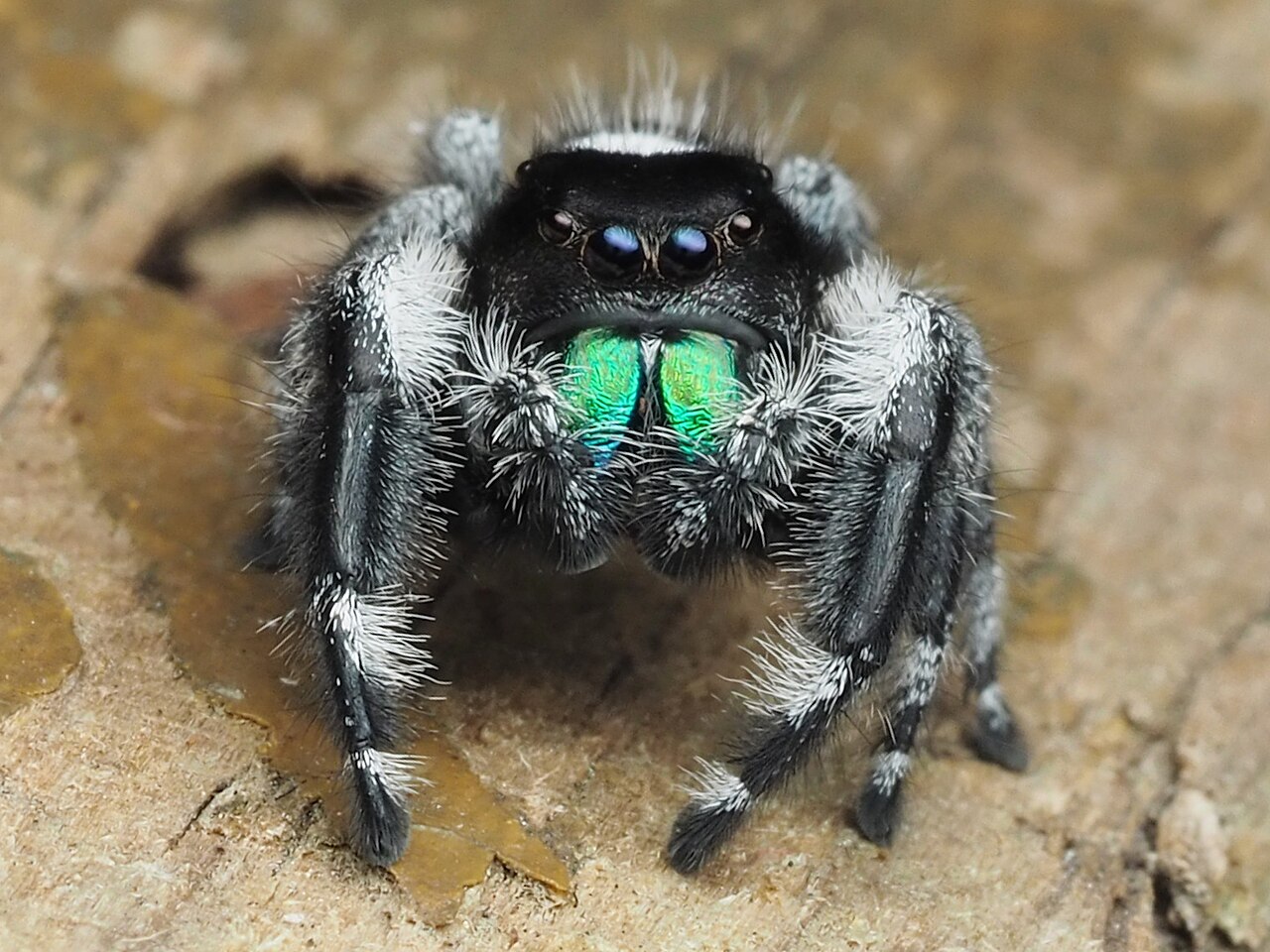
Front-facing adult male regal jumping spider with black-and-white hairs and iridescent green chelicerae.
Representative adult male Phidippus regius, not the future ShooForge mascot. Photo by spidereyes2020 via Wikimedia Commons (CC0 1.0).

Start where you are

What would feel useful today?

There is no required reading order. The short path stays short; deeper notes are available when you want them.

One-minute introduction

A small visual hunter, not a miniature monster.

Jumping spiders are alert because vision guides much of what they do. Learning what you are seeing can make an encounter feel more understandable.

Simplified front view

Eight eyes, different jobs

Simplified jumping spider eye arrangementA front-facing spider head with two large principal eyes, two smaller front eyes, and four secondary eyes indicated behind them.large principal eyes face forward
Principal eyes: detailed forward visionSecondary eyes: help notice motion around the spider
Jumping spiders have four pairs of eyes. This diagram explains their general layout, not exact species proportions.

If spiders make you uneasy

You can observe without getting close.

  • Turning toward you is information gathering. Their large front eyes help inspect detail.
  • They hunt insects actively. They do not rely on a prey-catching web like an orb-weaver.
  • Silk is still important. It is used for safety lines and sheltered retreats.
  • Curiosity is not a handling request. Watching from a comfortable distance is enough.
See how their visual hunting works

Three ideas to remember

The basics without the textbook wall.

The eye pairs do different jobs: principal eyes inspect detail while secondary eyes provide wider-field motion information and help direct tracking.

Regal jumping spiders locate prey visually and capture it with an active jump rather than depending on a prey-catching web.

Silk supports draglines and retreats used for rest and molting; a dragline can also stabilize a jump in at least one studied salticid species.

References for these three ideas (4)

Explore further

Go deeper only where you want to.

Browse every knowledge-base topic (11)
Jumping Spider 101Taxonomy, anatomy, eyes, silk, hunting, jumping, instars, and the terms used throughout the field station.Research in progressSpecies LibraryReusable, evidence-linked species profiles beginning with the regal jumping spider.Research in progressHusbandry & CarePractical care guidance with keeper recommendations clearly separated from scientific evidence.Research in progressFeeding & NutritionA growing feeder catalog and a cautious record of prey-size, feeding, and molting questions.Source review in progressLife Cycle, Molting & ReproductionLife stages, molt terminology, reproduction, aging, and end-of-life questions, expanded only as sources support them.Research in progressBehavior, Intelligence & CognitionVision, attention, learning, hunting, rest, and myth-versus-evidence questions without anthropomorphic shortcuts.Research in progressHealth, Safety & TroubleshootingA safety-first reference that keeps routine keeper guidance separate from veterinary claims.Source review in progressEnclosure Design & Maker ResearchBiological requirements translated into habitat features, fabrication constraints, and explicit validation gates.In developmentSpider Science & EvidencePlain-language behavior topics, evidence labels, disagreements, and research boundaries with references attached where they are useful.PublishedShooForge Spider Profile & JournalA future public mascot profile and dated field notes. No spider biography will be invented before arrival.Coming soonHabitat Cam & MediaFuture photos, clips, timelapses, and a welfare-first habitat camera with honest offline states.Coming soon

The ShooForge project

Real observations will begin with a real spider.

The future profile, habitat workshop, and journal are prepared without inventing an animal or presenting untested habitat ideas as finished care products.

Coming soon

Future spider profile

Name, life stage, molts, feeding, photographs, and observations will be recorded only after they are known.

In development

Habitat workshop

Biology and welfare requirements come before fabrication. External and removable accessories remain the preferred starting point.

Awaiting ShooForge observations

Field notes

Dated observations will stay separate from published research and will never be generalized from one animal to every jumper.

Coming soon

Future habitat cam

No habitat stream is active. A camera will appear only after the habitat, lighting, and welfare boundaries are ready.

Habitat workshop concept

In development

Emberwatch Micro-Forge

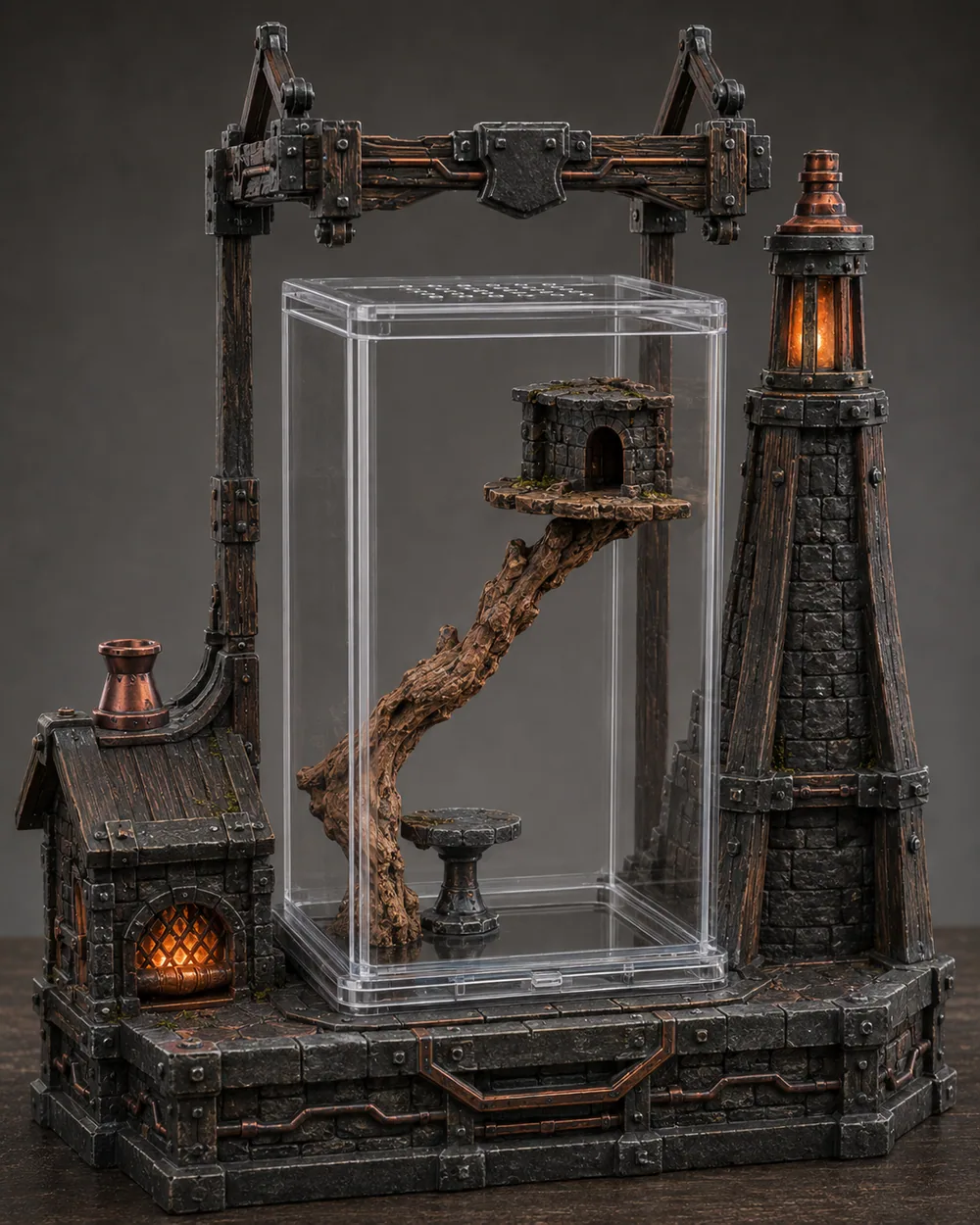
A ShooForge concept for an external, removable forge-themed frame around a purchased acrylic enclosure. The enclosure remains the containment core; decorative parts stay outside it or removable for cleaning.

Concept art only. Dimensions, physical fit, materials, cleaning access, heat, lighting, and animal welfare have not been validated. It is not a finished enclosure or care recommendation.

Concept rendering of a clear acrylic jumping spider enclosure nested inside an external dark-stone and copper forge frame.
Front concept — external frame around a separate enclosure.
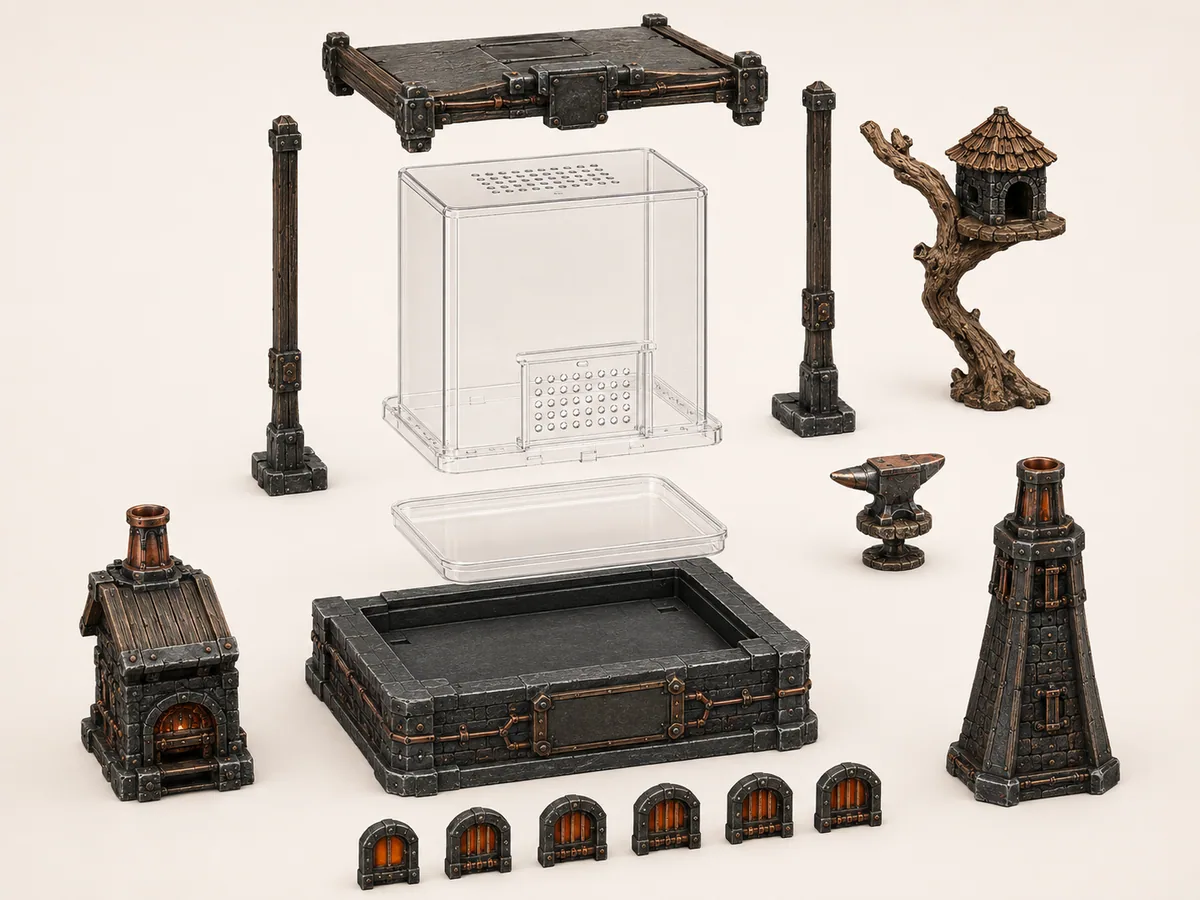
Exploded concept rendering separating the acrylic enclosure, removable tray, external forge base, frame, and decorative pieces.
Exploded study — separate containment, service tray, and external pieces.
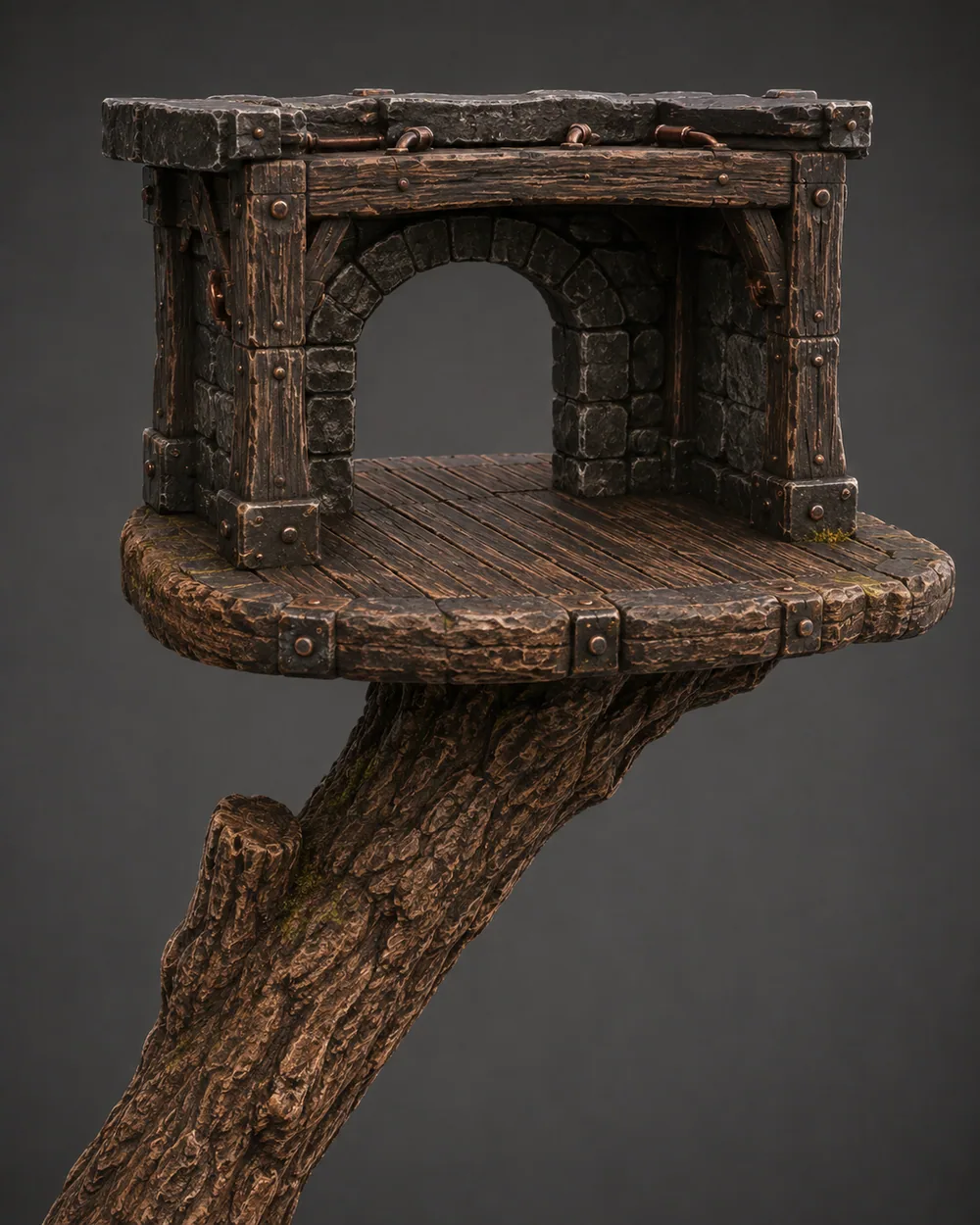
Concept rendering of a removable branch-mounted upper retreat with a dark timber and stone forge appearance.
Upper-retreat study — removable concept, not animal-tested.
See ShooForge Projects